

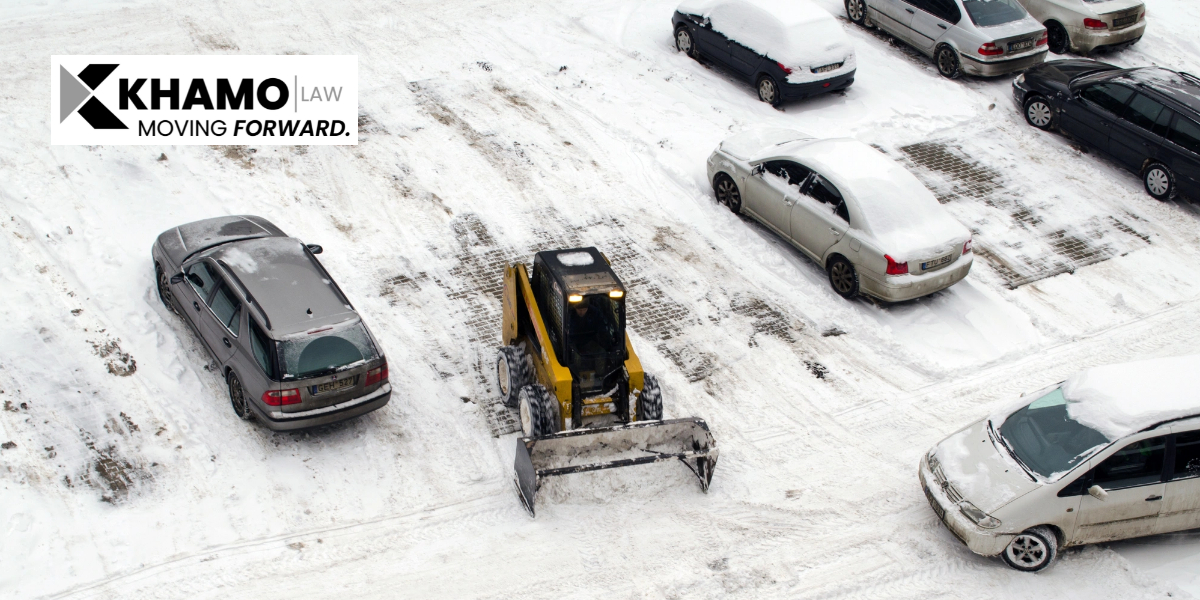
Winter in Michigan brings beautiful snow covered landscapes, but it also presents unique challenges for drivers. One common issue that arises during the colder months is parking lot accidents. These incidents can occur due to slippery conditions, poor visibility, or careless driving. Understanding who is responsible for covering the costs associated with these accidents is crucial for those involved. At Khamo Law, we’re here to help you navigate the complexities of winter parking lot accidents and the associated liability.
Common Causes of Winter Parking Lot Accidents
Parking lot accidents during winter months can happen for various reasons, including:
- Slippery Surfaces: Ice and snow can create hazardous conditions in parking lots. Drivers may lose control of their vehicles, leading to collisions with other cars or pedestrians.
- Reduced Visibility: Snowfall can obscure visibility, making it difficult for drivers to see other vehicles, obstacles, or pedestrians. This can lead to accidents when backing out of parking spaces or navigating tight areas.
- Careless Driving: In a rush to find parking or exit the lot, drivers may engage in reckless behavior, such as speeding or failing to yield the right of way, increasing the likelihood of accidents.
- Negligent Property Maintenance: Property owners are responsible for maintaining safe conditions in their parking lots. If they fail to properly clear snow or ice, they may be held liable for accidents that occur as a result.
Determining Liability in Parking Lot Accidents
Establishing who is at fault in a winter parking lot accident can be complex. Here are some factors that come into play:
- Driver Negligence: If a driver was speeding, distracted, or otherwise negligent, they may be held responsible for the accident. This includes failing to adjust their driving behavior to match winter conditions.
- Property Owner Liability: If the accident was caused by unsafe conditions due to the property owner’s failure to maintain the parking lot, they could be held liable. For example, if they did not adequately clear snow or apply salt to icy areas, they may share responsibility for any resulting accidents.
- Comparative Negligence: Michigan follows a comparative negligence rule, meaning that if both parties share fault, the compensation may be adjusted based on the percentage of fault assigned to each party. For instance, if one driver is found to be 70% at fault and the other 30%, the compensation awarded will reflect that division of responsibility.
Who Pays for Damages?
Determining who pays for damages after a winter parking lot accident depends on the circumstances surrounding the incident. Here are some potential avenues for compensation:
- Insurance Claims: If you are involved in a parking lot accident, your auto insurance may cover damages, depending on your policy. In Michigan, drivers are required to carry no-fault insurance, which can help cover medical expenses and property damage, regardless of fault.
- Liability Claims: If another driver is found to be at fault, you can file a claim against their insurance for damages. This includes medical expenses, vehicle repairs, and any other costs associated with the accident.
- Property Owner Claims: If the property owner’s negligence contributed to the accident, you may have grounds to pursue a claim against them. This could involve filing a premises liability claim if unsafe conditions led to the accident.
Conclusion
Winter parking lot accidents in Michigan can be challenging to navigate, especially when it comes to determining liability and seeking compensation. Understanding the common causes of these accidents and the factors that influence who pays can empower you to take the right steps after an incident.
At Khamo Law PLLC we are dedicated to helping clients understand their rights and options following a winter parking lot accident. If you or a loved one has been involved in such an incident, don’t hesitate to reach out for legal assistance. Contact us today for a free consultation, call us at (248) 466-0606 or (855) Khamo-4-U. Stay safe this winter, and remember that you don’t have to face these challenges alone.